OCD (Obsessive Compulsive Disorder)
Treatment for OCD using Exposure and Response Prevention (ERP) and medication. Breaking the obsession-compulsion cycle.
OCD is not about being neat, or particular, or liking things a certain way.
That’s the misconception that keeps most people from naming what they actually have. OCD is a disorder of intrusive thoughts and the exhausting rituals people perform to make those thoughts go away. The thoughts are almost always things the person finds repugnant — images of harm, sexual content involving wrong people, contamination fears, blasphemy, doubts about whether they love their partner or are who they think they are. The rituals are whatever has worked in the past to bring the anxiety down, for about thirty seconds, before it comes back louder.
People with OCD often go years without telling anyone what their thoughts actually are, because naming them feels like admitting to being a monster. They’re not a monster. They have a condition where the brain has mislabeled a normal passing thought as urgent and dangerous, and the more you try to not-think it, the louder it gets.
What the thoughts look like
Contamination and washing is the cultural stereotype, and yes, it’s a real presentation. But it is one of many, and arguably not the most common anymore:
- Harm obsessions. Intrusive images of hurting a child, a partner, a pet. The more horrified the person is, the more OCD it is.
- Sexual or moral intrusions. Unwanted sexual thoughts about inappropriate targets, worries about having done something shameful you don’t remember, scrupulosity around religion.
- Relationship OCD. Constant doubt about whether you love your partner, whether they’re “the one,” whether you’re attracted to them — not as an honest question but as an interrogation that never resolves.
- “Pure O” — obsessions that happen almost entirely inside the head, with mental rituals instead of visible ones (repeating phrases, reviewing past events, seeking reassurance silently).
The details vary. The mechanism is the same: a thought shows up, it is uncomfortable, you do something to stop feeling uncomfortable, the discomfort comes back stronger, you do more of the thing.
The cycle
- A thought, image, or doubt shows up uninvited
- It feels urgent — as if not acting on it means something terrible
- You do the ritual — a wash, a check, a prayer, a silent counter, asking your partner for the hundredth time if they still love you
- You get a few minutes of relief
- The thought comes back, often more intrusively
- Your tolerance for the discomfort gets worse, not better
The compulsions are the fuel. This is important, because it means treating OCD is not about thinking the right thoughts or willing yourself to feel differently. It’s about breaking the feedback loop between the thought and the ritual.
How treatment works
OCD has a specific and well-evidenced treatment protocol that genuinely works — and it does not look like general talk therapy.
The therapeutic approach (known as Exposure and Response Prevention, or ERP) is collaborative, graded, and paced by the patient. The short version: you deliberately engage with the thoughts, images, or situations that trigger the obsession, and you do not perform the compulsion. You stay in the discomfort. You let it peak and come down on its own. Over many repetitions, the brain learns that the thought was never the emergency it claimed to be, and the ritual becomes unnecessary.
ERP works. It also asks more of the patient than most therapies. Homework between sessions is the actual work; the sessions coach you on what to practice.
Medication is often a useful part of the plan for moderate-to-severe OCD, typically in combination with ERP rather than as a substitute. Your clinician will walk you through medication options, expected timelines (OCD can take longer to respond than depression or anxiety), and how to tell whether something’s working.
Family accommodation
If someone in your life has OCD, you have almost certainly been pulled into it. You answer the reassurance-seeking question for the tenth time. You avoid the contaminated object. You do the check for them. This is called accommodation, and it’s how families naturally try to help. It also keeps the disorder going.
Part of treatment, when it’s relevant, is teaching family members how to step out of the rituals without stepping away from the person. That can feel cruel at first. It isn’t.
What we do not do
- Tell you the thought means nothing about you (though that is true) as a substitute for treatment. Reassurance is itself a compulsion, and we won’t feed it.
- Treat OCD as “just anxiety.” The overlap is real but the treatment is different.
- Push ERP at a pace you haven’t agreed to.
When to come in
Come in if intrusive thoughts or repetitive behaviors are taking an hour or more out of most days, if they are meaningfully interfering with work or relationships, or if you’ve been quietly managing something like this for years because you couldn’t name it.
If you suspect it’s OCD but you’re not sure — come in anyway. Diagnosing it correctly is the first step, and a lot of OCD gets treated as generalized anxiety for years before anyone asks the right questions.
Book an appointment or call 720-443-1691.
Ready to get started?
Most new patients are seen within a week. Book online or give us a call — we'll help you find the right clinician.
Our team
Any of our clinicians can help you get started. Book with whoever's available, or tell us what you're looking for and we'll match you.
Cathleen Barrett
MSN, PMHNP-BC
I am accepting new clients for medication management services. I am double board certified as a Psychiatric Mental Health Nurse Practitioner (PMHNP) ...
Christine Taylor
LPC
Feeling stuck? Anxious? Depressed? Struggling in your relationships or navigating a divorce? Are you feeling frustrated with your life and unsure of ...

David Geldert
MSN, PMHNP-BC
I am a board-certified psychiatric nurse practitioner with 10 years of experience in healthcare. I'm passionate about working with clients of all age ...

Jenna Kakish
LPCC
I approach therapy through a relationship-centered lens. Our early experiences, especially within family systems or the absence of them, often shape ...
Jodi Barry
MSN, PMHNP-BC
Accepting new clients with immediate availability for medication management! Medicaid and private insurance both accepted. Jodi is a board-certified ...

Katie Farley
MSN, PMHNP-BC
Hello! My name is Katie Farley and I am a board-certified Psychiatric Mental Health Nurse Practitioner (PMHNP) with over 14 years of nursing experie ...
Kelly Bergstedt
MSN, PMHNP-BC
I am a board-certified Psychiatric Mental Health Nurse Practitioner who provides individualized and evidence-based care to people with a wide variety ...
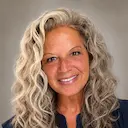
Kimbrelee Ray
MSN, PMHNP-BC
I am accepting new clients for medication management. I am a double board-certified Psychiatric Mental Health Nurse Practitioner (PMHNP-BC and CARN-A ...

Lars Olson
Psychologist, LCP
I am a licensed clinical psychologist and a licensed school psychologist. My approach to therapy is adaptable and largely dependent on the client's n ...

Lindsey Dempster
MSN, PMHNP, APRN
Accepting new clients for medication management! I am a board-certified Psychiatric Mental Health Nurse Practitioner who graduated Summa Cum Laude in ...
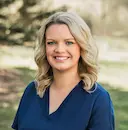
Pascha Orr
MSN, PMHNP-BC
Accepting new patients with immediate availability for medication management! My ideal clients are children, adolescents, and adults facing challenge ...

Rebecca Robitaille
DNP, MSN, PMHNP-BC
Rebecca Robitaille is a Board-Certified Psychiatric Mental Health Nurse Practitioner, currently welcoming new clients seeking medication management. ...
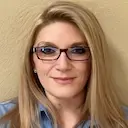
Sarah Paryga
MSN, PMHNP-BC
Hello! My name is Sarah Paryga (par-E-gah). I am a board-certified psychiatric mental health nurse practitioner. I have been working in mental health ...

Terry O'Connor
LPC
The great psychiatrist and writer Irvin Yalom said of psychotherapy that "It's the relationship that heals." I have forged healing therapeutic relati ...

Theresa Gilliland
FNP-BC, PMHNP-BC, DNP, MHA, BSN
I, Dr. Theresa Gilliland, am a dual certified Psychiatric Mental Health Nurse Practitioner and a Family Nurse Practitioner. I am licensed in Californ ...
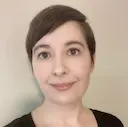
Che Williams
LPC
Hey, I’m Ché. I’m a therapist at Trend Mental Health. I recently moved from Florida to Colorado and am fully licensed in both states. My goal is to h ...
Not bookable online — contact us to schedule

Narlin Smith
MSN, FNP-C, PMHNP-BC
Narlin (pronounced Narleen) is a dual licensed, board certified FNP and PMHNP. She graduated from South University as a Family Nurse Practitioner and ...
Not bookable online — contact us to schedule

Valerie Judd
LPC
A warm hello! I'm Val, a therapist at Trend Mental Health & Wellness. I graduated with a BA in Psychology from the University of Colorado Denver and ...
Not bookable online — contact us to schedule